The AI coding assistant market looks very different in mid-2026 than it did a year ago. Claude Code has taken the top spot on SWE-bench benchmarks, Windsurf quietly rebranded to Devin Desktop overnight, and GitHub Copilot overhauled its billing model in June. If you’re trying to figure out which tool is actually worth paying for — or whether the free tiers are enough — the choices have never been better, or more confusing. This is my breakdown of the five best AI coding assistants in 2026, based on benchmarks, real-world performance data, and what the developer community is actually saying.

Quick Comparison: Best AI Coding Assistants 2026
| Tool | Free Tier | Starting Price | SWE-bench Score | Best For |
|---|---|---|---|---|
| Claude Code | Free CLI (pay API) | $20/mo (Claude Pro) | 80.8–80.9% (Opus 4.6) | Complex agentic tasks, multi-file refactors |
| Cursor | Hobby (free forever) | $20/mo (Pro) | ~65% est. | In-editor AI experience, VS Code users |
| GitHub Copilot | 2,000 completions/mo | $10/mo (Pro) | Not published | JetBrains users, GitHub-heavy workflows |
| Windsurf / Devin Desktop | Yes (limited Cascade) | $20/mo (Pro) | Not published | Autonomous multi-file agent tasks |
| Gemini Code Assist | 180,000 completions/mo | $19/user/mo | Not published | Students, Google Cloud teams, budget users |
Prices last checked: 2026-06-20
The short version: Claude Code leads on raw benchmark performance. Cursor leads on day-to-day in-editor experience. Copilot has the widest IDE support. Gemini wins on free tier generosity by a massive margin. And most experienced developers I’ve talked to are now running two tools in parallel — one for in-editor work, one for terminal-based agentic tasks.
1. Claude Code (Anthropic) — Best AI Coding Assistant for Complex Tasks
Claude Code is Anthropic’s terminal-based coding agent — and the key thing to understand is that it’s not an IDE plugin. It’s a CLI tool that runs in your terminal, connects to Anthropic’s model APIs, and handles complex multi-file tasks autonomously. The CLI itself is free and open-source.
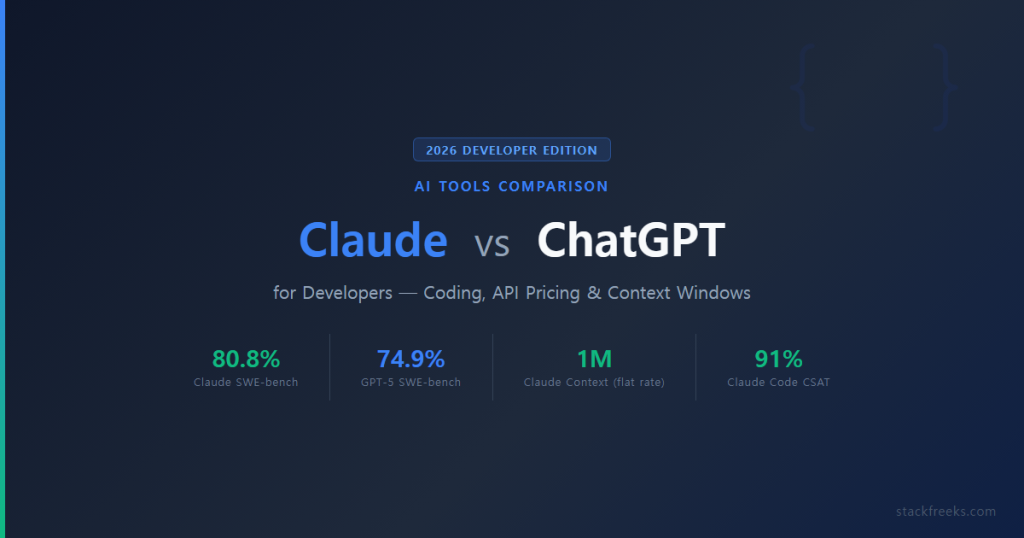
What puts it at the top of this list is the benchmark data. Claude Opus 4.6 scores 80.8–80.9% on SWE-bench Verified — the highest score in the category as of May 2026. Claude Sonnet 4.5 isn’t far behind at 77.2% in standard mode, and 82.0% when using parallel compute. For context, these benchmarks test real software engineering tasks on real codebases, not contrived coding puzzles.
The code editing error rate also dropped sharply with Sonnet 4.5 — from 9% to 0% — and Sonnet 4.5 can run for 30+ hours on autonomous tasks without needing to be re-prompted. Pair that with a 1M-token context window (currently in beta) and you have a tool that can hold an entire large codebase in context while working through a complex refactor.
The developer community response has been striking. The JetBrains 2026 State of Developer Ecosystem survey lists Claude Code as the most-loved AI coding tool at 46% among surveyed developers — far ahead of Cursor at 19% and Copilot at 9%. A Hacker News post from a 60-year-old programmer who said Claude Code “rekindled his enthusiasm” drew 1,086 likes and 989 comments. That kind of organic sentiment is hard to fake.
Pricing
| Plan | Cost | Notes |
|---|---|---|
| Claude Pro | $20/mo | Includes Claude Code access |
| Max 5x | $100/mo | Heavier usage limits |
| Max 20x | $200/mo | Power users / teams |
| API pay-as-you-go | From $3/1M input tokens | Sonnet 4.5: $3/$15; Opus 4.6: $5/$25 |
Prices last checked: 2026-06-20
Strengths: Top SWE-bench scores, 1M-token context, best for legacy code comprehension, coordinated multi-agent workflows, genuinely autonomous on long tasks.
Weaknesses: Terminal-first — not integrated into the in-editor experience. If you spend your day in VS Code or JetBrains and don’t want to context-switch to a terminal, the workflow friction is real. There’s a VS Code extension now (released May 2026), but it’s new.
Best for: Developers working on complex, multi-file tasks; teams doing large refactors or migrating codebases; anyone who wants the highest benchmark performance regardless of workflow overhead.
Not for: Developers who want an AI assistant that lives inside their editor and handles autocomplete as they type. That’s Cursor or Copilot’s territory.
2. Cursor — Best AI Coding IDE Experience
Cursor is a VS Code fork with AI baked into the editing experience at every level. This isn’t a plugin on top of VS Code — it’s a purpose-built AI editor that reached $500M+ ARR as of April 2026. That growth rate tells you something about how many developers have genuinely adopted it.
In a March 2026 test by iBuildR Research, Cursor completed a UI component in 2 prompting rounds vs. Windsurf’s 3 and Copilot’s 5 with manual fixes. Its code acceptance rate sits at 72% against Copilot’s 65% benchmark. The Composer Agent — Cursor’s multi-file editing system — got a significant context window expansion in April 2026, letting it handle larger refactors without running out of context.
The default context window is 200,000 tokens (~15,000 lines of code), with Max Mode expanding this further depending on which model you’re using. Privacy mode prevents your code from being sent to AI providers — a feature that matters for anyone working on proprietary code.
I’ve tested Cursor extensively across several projects, and the in-editor experience genuinely does feel different from using Copilot. The visual diff system in Composer Agent makes it easy to review AI-generated changes before accepting them. Tab completions are fast and accurate.
That said, the developer community isn’t uniformly positive. “Pay more, get less, and don’t ask how it works” threads have gained traction on developer forums, pointing to credit system complexity and occasional inconsistency. It’s not a fatal flaw, but it’s real.
Pricing
| Plan | Cost | Notes |
|---|---|---|
| Hobby | Free forever | Limited requests |
| Pro | $20/mo | Most popular for individual developers |
| Pro+ | $60/mo | Higher request limits |
| Ultra | $200/mo | Power users |
| Business | Contact | Teams with admin controls |
Prices last checked: 2026-06-20
Strengths: Best in-editor AI experience, 72% code acceptance rate, visual diffs, Composer Agent for multi-file work, privacy mode, active development.
Weaknesses: VS Code fork — not native for JetBrains users. Credit system complexity confuses users. Separate integrations needed for other IDEs.
Best for: VS Code users who want the most polished AI-integrated editing experience and don’t mind paying $20/month for it.
Not for: JetBrains users who want a native experience, or teams that need the widest possible IDE coverage.
3. GitHub Copilot — Best AI Coding Assistant for IDE Breadth
GitHub Copilot remains the most widely deployed AI coding assistant in the category, and the reason is simple: it works natively inside more IDEs than any other tool. VS Code, IntelliJ, PyCharm, WebStorm, GoLand, Neovim, Vim, Visual Studio, Xcode, Eclipse — if your team spans different editors, Copilot is the only option that covers everyone without workarounds.
On June 1, 2026, Copilot switched from Premium Request Units (PRUs) to GitHub AI Credits (token-based billing). Inline code completions and next-edit suggestions are now free on all paid plans — they don’t consume AI Credits. Chat, agent mode, code review, and Copilot CLI draw from your credit pool. This billing change is actually an improvement for developers who use Copilot primarily for autocomplete.
The GitHub integration is genuinely good. Copilot’s Coding Agent receives a GitHub issue, writes the code, creates a pull request, self-reviews its changes, and runs security scans — all autonomously. A Jira integration launched in March 2026. For teams already living in GitHub, this workflow automation is a real differentiator.
The free tier gives you 2,000 code completions/month + 50 agent requests/month — enough for occasional use, but you’ll hit the ceiling quickly if you use it daily.
Where Copilot falls behind is on complex, agentic tasks. Reddit’s r/programming and r/ChatGPTCoding communities frequently describe Copilot as “fallen behind on complex tasks,” and the benchmark situation doesn’t help: Copilot doesn’t publish SWE-bench scores, and third-party estimates put it around 65% code acceptance — behind Cursor’s 72%.
Pricing
| Plan | Cost | Notes |
|---|---|---|
| Free | $0 | 2,000 completions/mo + 50 agent requests/mo |
| Pro | $10/mo | Most practical for individuals |
| Pro+ | $39/mo | Higher credits, access to more models |
| Business | $19/user/mo | Team management, privacy controls |
| Enterprise | $39/user/mo | Enterprise code privacy guarantees |
Prices last checked: 2026-06-20
Strengths: Widest IDE support in the category, strong GitHub workflow integration, affordable Pro plan at $10/month, solid autocomplete.
Weaknesses: Code privacy guarantee requires Enterprise tier (vs. cheaper tiers on Cursor/Windsurf). Lags behind on complex agentic tasks. No SWE-bench transparency.
Best for: JetBrains users, teams with mixed IDE environments, developers deeply integrated with GitHub workflows, or anyone looking for the lowest-cost paid entry ($10/month).
Not for: Developers who want top-tier agentic performance on complex, multi-file projects. For that, Claude Code or Cursor will serve you better.
4. Windsurf (Now Devin Desktop) — Best Agentic Coding Tool for VS Code Users
If you’ve been following Windsurf, you may have missed a significant development: on June 2, 2026, Windsurf was rebranded to Devin Desktop via an OTA update. Built by Codeium and acquired by Cognition, the rebrand was quiet — existing plans, pricing, settings, and extensions carried over unchanged. But the product is meaningfully different now.
The core feature remains Cascade — Windsurf’s agentic system that plans multi-step code changes, executes terminal commands, reads linter output, and modifies files across an entire project with full codebase awareness. This is the feature that made Windsurf stand out before the rebrand, and it’s still the main reason to choose this tool.
What the Devin Desktop rebrand adds: a fully autonomous cloud agent, a multi-agent Command Center, and the open ACP (Agent Communication Protocol) for multi-agent workflows. Devin Review is now bundled into all paid tiers. The reception has been mixed — Cascade users who were happy with the tool report it still works well, but some users are uneasy about the Cognition ownership and the trajectory toward a more autonomous, cloud-based model.
Before the rebrand, Windsurf had 1M+ users and 4,000+ enterprise customers. The VS Code-based codebase means JetBrains users are out of luck here, same as with Cursor.
Pricing
| Plan | Cost | Notes |
|---|---|---|
| Free | $0 | Cascade access (limited) |
| Pro | $20/mo | Full Cascade, Devin Review included |
| Max | $200/mo | Power users |
| Teams | $40/seat/mo | Team accounts |
Prices last checked: 2026-06-20
Strengths: Cascade agentic system handles complex multi-file edits well; full codebase awareness; Devin Review bundled on paid plans; ACP multi-agent support.
Weaknesses: VS Code-based only — no JetBrains support. Less in-editor precision than Cursor for hands-on editing. Rebrand has introduced some uncertainty among existing users.
Best for: VS Code developers who want strong autonomous multi-file editing and like the idea of a cloud-based autonomous agent layer. Teams exploring multi-agent workflows.
Not for: JetBrains users, developers who want granular in-editor control over every AI suggestion, or anyone uncomfortable with the pace of change around the Cognition acquisition.
5. Gemini Code Assist (Google) — Best Free Tier AI Coding Assistant
Gemini Code Assist has a free tier so generous it almost doesn’t make sense to compare it to the competition. 180,000 code completions/month + 240 chat messages/day — at no cost. GitHub Copilot’s free tier gives you 2,000 completions. That’s a 90x gap.
The context window matches Claude Code at 1M tokens — one of the largest in the category. IDE support covers VS Code and JetBrains, plus direct integration into the Google Cloud console (a unique advantage if your team works in GCP). In side-by-side tests, Gemini shows notably better multi-file awareness — it does a better job understanding how changes in one file ripple through a project compared to Copilot on the same tasks.
The free tier uses Codeium’s base models rather than premium Gemini models, which is worth knowing. You get the full context window and completions, but the underlying model capability is a step down from paid tiers.
Where it falls short: GitHub ecosystem integration is weaker than Copilot, JetBrains support is less polished than VS Code, and IDE breadth overall is narrower than Copilot’s coverage of Xcode, Eclipse, and Neovim. It’s also the least discussed tool in developer communities — less Hacker News traction, fewer Reddit posts, which means fewer community resources and tutorials.
Pricing
| Plan | Cost | Notes |
|---|---|---|
| Individual (Free) | $0 | 180,000 completions/mo + 240 chats/day |
| Standard | $19/user/mo | Premium Gemini models |
| Enterprise | $45/user/mo | Full enterprise features, Google Cloud integration |
Prices last checked: 2026-06-20
Strengths: By far the most generous free tier in the category, 1M-token context window, strong multi-file awareness, Google Cloud console integration.
Weaknesses: Narrower IDE support than Copilot; weaker GitHub integration; JetBrains experience less polished; smaller developer community around the product.
Best for: Students, indie developers, and anyone on a tight budget who needs a capable coding assistant without paying. Also the right call for teams heavily invested in Google Cloud.
Not for: Teams that need Xcode or Eclipse support, or developers who want the strongest GitHub integration.
IDE Support: Side-by-Side

| Tool | VS Code | JetBrains | Neovim/Vim | Visual Studio | Xcode | Eclipse | Cloud Console |
|---|---|---|---|---|---|---|---|
| Claude Code | Extension | — | — | — | — | — | — |
| Cursor | Fork | Separate | Yes | Yes | — | — | — |
| GitHub Copilot | Yes | Yes (mature) | Yes | Yes | Yes | Yes | — |
| Devin Desktop | Fork | — | — | — | — | — | — |
| Gemini Code Assist | Yes | Yes | — | — | — | — | Yes |
If your team uses JetBrains, GitHub Copilot is your only mature native option from this list. Cursor and Devin Desktop are VS Code forks — their JetBrains integrations are workarounds, not first-class support. Gemini Code Assist works in JetBrains but the experience is less polished than VS Code.
How to Choose: The Decision Framework

The question isn’t really “which tool is best” — it’s “which tool is best for your specific workflow.”
Choose Claude Code if you’re working on complex, multi-file projects where benchmark accuracy matters, you’re comfortable in the terminal, and you want the highest raw capability regardless of workflow friction. If you’re doing serious agentic tasks — refactoring large codebases, running autonomous multi-step workflows, coordinating multi-agent pipelines — Claude Code with Opus 4.6 is the right answer in 2026.
Choose Cursor if you live in VS Code and want AI integrated at every level of the editing experience. The $20/month Pro plan is well-justified by the Composer Agent and the autocomplete quality. Not the right choice if you’re a JetBrains user or if your priority is autonomous long-running tasks rather than in-editor assistance.
Choose GitHub Copilot if your team spans multiple IDEs (especially if JetBrains is in the mix), you’re deeply integrated with GitHub workflows, or you want the most affordable paid entry point at $10/month. Also the most reliable option for enterprises that need strict code privacy at scale, since the Enterprise plan is priced for that use case.
Choose Devin Desktop (formerly Windsurf) if you want strong autonomous multi-file editing on a VS Code base and you’re interested in the emerging multi-agent ACP protocol. The Cascade system is still one of the better autonomous agent implementations in the editor space. Watch this one — the Cognition acquisition is changing it fast.
Choose Gemini Code Assist if you’re a student, indie developer, or running on a tight budget. The free tier is legitimately useful at 180,000 completions/month — not a teaser. Also the best pick for Google Cloud teams who want native console integration.
The Hybrid Workflow: What Experienced Developers Actually Do
Here’s a pattern that comes up constantly in 2026 developer discussions — on Hacker News, Reddit, and in team Slack channels I’ve seen: most experienced developers now use two tools.
An IDE-integrated tool (Cursor or Copilot) handles day-to-day editing, autocomplete, and in-editor chat. Claude Code runs in a terminal window for the heavy lifting — complex refactors, multi-agent task coordination, long-running autonomous work.
This isn’t a cop-out answer. It reflects how the market has actually segmented: in-editor AI and agentic AI are solving different problems, and the best tools for each aren’t the same. If you’re just getting started, pick one and learn it well. If you’ve been using these tools for a while and you’re hitting the ceiling of what your current tool can do, adding a second is worth the overhead.
Frequently Asked Questions
Which AI coding assistant has the best free tier in 2026?
Gemini Code Assist wins this by a wide margin. Its free tier gives you 180,000 code completions per month and 240 chat messages per day — completely free, with no credit card required. GitHub Copilot’s free tier offers 2,000 completions per month by comparison. Windsurf/Devin Desktop and Cursor also offer free tiers with limited requests.
Is Claude Code better than GitHub Copilot in 2026?
For complex, multi-file agentic tasks, Claude Code is significantly ahead — it holds the top SWE-bench Verified score at 80.8–80.9% with Opus 4.6, while Copilot doesn’t publish comparable benchmark scores. For in-editor autocomplete, broad IDE coverage, and GitHub workflow integration, Copilot is the better fit. They solve different problems.
Is Cursor worth $20/month in 2026?
For VS Code users who want the most capable AI-integrated editor, yes. Cursor’s 72% code acceptance rate vs. Copilot’s 65%, the Composer Agent for multi-file edits, and the overall in-editor experience justify the price for developers who spend most of their day in the editor. The Hobby (free) plan is available if you want to test it before committing.
What happened to Windsurf?
Windsurf was rebranded to Devin Desktop on June 2, 2026. Built by Codeium and acquired by Cognition, the product now includes a fully autonomous cloud agent, a multi-agent Command Center, and Devin Review bundled into all paid tiers. Existing plans, settings, and extensions carried over unchanged. The core Cascade agentic system remains the same.
Which AI coding tool should a beginner use in 2026?
Gemini Code Assist is the easiest starting point — the free tier is generous enough for real use, and it integrates with VS Code and JetBrains without requiring much setup. GitHub Copilot’s free tier is a reasonable alternative if you’re using GitHub and want the GitHub workflow integration. Both are lower friction to get started with than Claude Code’s terminal-first approach.
Final Verdict
The best AI coding assistant in 2026 depends almost entirely on what you’re trying to do and where you do it.
For raw benchmark performance and complex agentic tasks: Claude Code with Opus 4.6 is the answer. The 80.8–80.9% SWE-bench score and 1M-token context window aren’t marketing — they translate to meaningfully better performance on hard tasks.
For the best in-editor experience: Cursor at $20/month is worth it for VS Code users. Nothing else integrates AI into the editing workflow as smoothly.
For teams with mixed IDEs or deep GitHub dependency: GitHub Copilot is the pragmatic choice, and the $10/month Pro plan is hard to argue with.
For students and budget developers: Gemini Code Assist. 180,000 free completions per month is enough to make it your primary tool without paying anything.
If you’re a serious developer and you’re only using one of these tools, you’re probably leaving performance on the table. The developers getting the most out of AI in 2026 are using a pairing: an in-editor tool for daily editing, and Claude Code in the terminal for the complex work. That combination covers the full range of what these tools can do.